
SKIN . HAIR . LASER
SKIN . HAIR . LASER
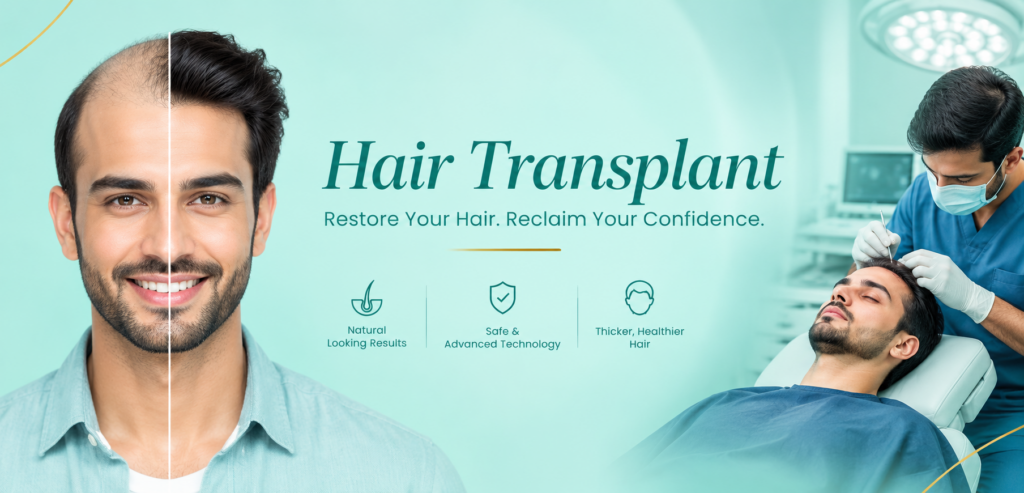
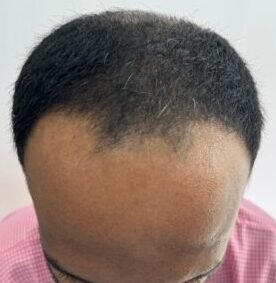
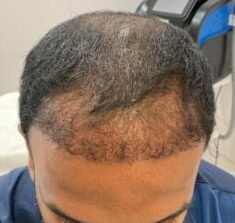
Hair loss can affect your appearance and confidence at any stage of life. A hair transplant is a surgical procedure that redistributes hair follicles from a suitable donor area to areas experiencing hair thinning or loss.
Hair transplant treatment is planned around your individual pattern of hair loss, donor hair availability, facial features and desired appearance.
A hair transplant involves transferring healthy hair follicles from a donor area—typically the back or sides of the scalp—to areas affected by hair loss.
The transplanted follicles can grow new hair in the recipient area, with the goal of creating a natural-looking hairline and improved hair density.
A hair transplant may be considered for:
Your scalp, pattern of hair loss, donor area and overall suitability are assessed by the treating medical team.
A personalised plan is developed based on your hair-loss pattern, available donor follicles, facial proportions and treatment goals.
Suitable hair follicles are carefully obtained from the donor area using the selected transplantation technique.
The harvested follicles are placed into carefully planned recipient areas to support a natural-looking hairline and distribution.
You receive post-procedure care instructions and follow-up guidance to monitor healing and hair growth.
Personalised Treatment Planning
Every hair-loss pattern is different, so your treatment is planned according to your individual needs.
Natural-Looking Approach
Hairline design and follicle placement are planned to complement your facial features.
Experienced Medical Care
Your procedure is carried out with appropriate medical assessment and clinical care.
Comprehensive Follow-Up
We provide guidance throughout the recovery and hair-growth journey.
Suitability depends on several factors, including the cause and pattern of hair loss, donor hair availability, scalp condition and overall health.
A detailed consultation is important before deciding whether a hair transplant is appropriate for you.
Transplanted follicles are generally intended to provide long-term hair growth, but outcomes vary from person to person. Existing non-transplanted hair may continue to thin, so ongoing hair-loss management may also be recommended.
Hair growth takes time. Transplanted hair typically progresses through different growth phases, and visible improvement develops gradually over the following months.
The procedure is performed with appropriate anaesthesia to minimise discomfort. Some soreness, swelling or temporary sensitivity may occur during recovery.
Recovery varies depending on the individual and the technique used. You will receive specific post-procedure instructions to support healing.
Hairline design, graft placement and appropriate density are important factors in achieving a natural-looking result. Your treatment plan will be tailored to your individual facial features and donor hair availability.
A personalised assessment can help you understand your hair-loss pattern, treatment options and expected outcomes.
Book Your Consultation at Cutie Pie Clinic.
No Shortcuts. Just the Right Approach.

Personalised care for your Skin, Hair & Body.
Personalised care for your Skin, Hair & Body.